
What Happens When the Border Never Closes
Mass migration is reshaping Britain — not by choice, but by default.

I. The Numbers Keep Rising
Britain is undergoing one of the most dramatic demographic shifts in its modern history — not by popular vote, but by policy design. Legal and illegal. Regular and irregular. Whatever the label, the pressure is the same.
In the year ending December 2024, 948,000 people immigrated to the UK. That figure is still higher than the population of Leeds, and remains well above anything seen before 2021.
At the same time, net migration has fallen — from 860,000 the previous year to 431,000. This was driven by a sharp fall in immigration from non-EU+ countries (especially dependants), and a rise in emigration among students and skilled workers.
But the pressure remains. The UK’s total foreign-born population now exceeds 10 million.
This isn’t just about numbers. It’s about scale, speed, and consequence — how communities change, how common language fragments, how a sense of “us” begins to thin. GP surgeries close their lists. School places disappear. The Tube becomes standing room only at peak times.
A serious country does not absorb this much, this fast, without cost.
Subscribe to The Third Island for serious, fact-based commentary on Britain’s future.
II. What No One Will Say
The pressure is visible — but the silence remains deafening. Politicians speak only when cornered. Journalists avoid it until someone else makes it safe. And when the public finally dares to speak, they are corrected — not heard.
Arrivals continue by boat, by plane, and — in some cases — hidden in the backs of lorries or shipping containers.
These journeys are often desperate, sometimes fatal, and yet the broader system that enables them remains largely unscrutinised.
And beneath the radar, thousands more arrive each week through family visas, student routes, care sector recruitment, and low-wage sponsorships.
None of this is accidental. Britain’s immigration system is vast, legal, and designed. Yet the country is not allowed to have a serious conversation about limits, trade-offs, or the long-term costs of rapid demographic change.
Instead, the debate is moralised. Dissent is pathologised. And so the silence deepens — even as the numbers rise.
It now feels — in many places — like a country of outsiders and dependents, where no one is allowed to ask, “How much is too much?”
III. Designed, Not Accidental
This didn’t happen by accident. It happened because Britain built an economic model that needs migration to hide its decline.
When GDP flatlines, governments don’t ask why — they import workers. More activity. More consumption. More data points to feed the Treasury.
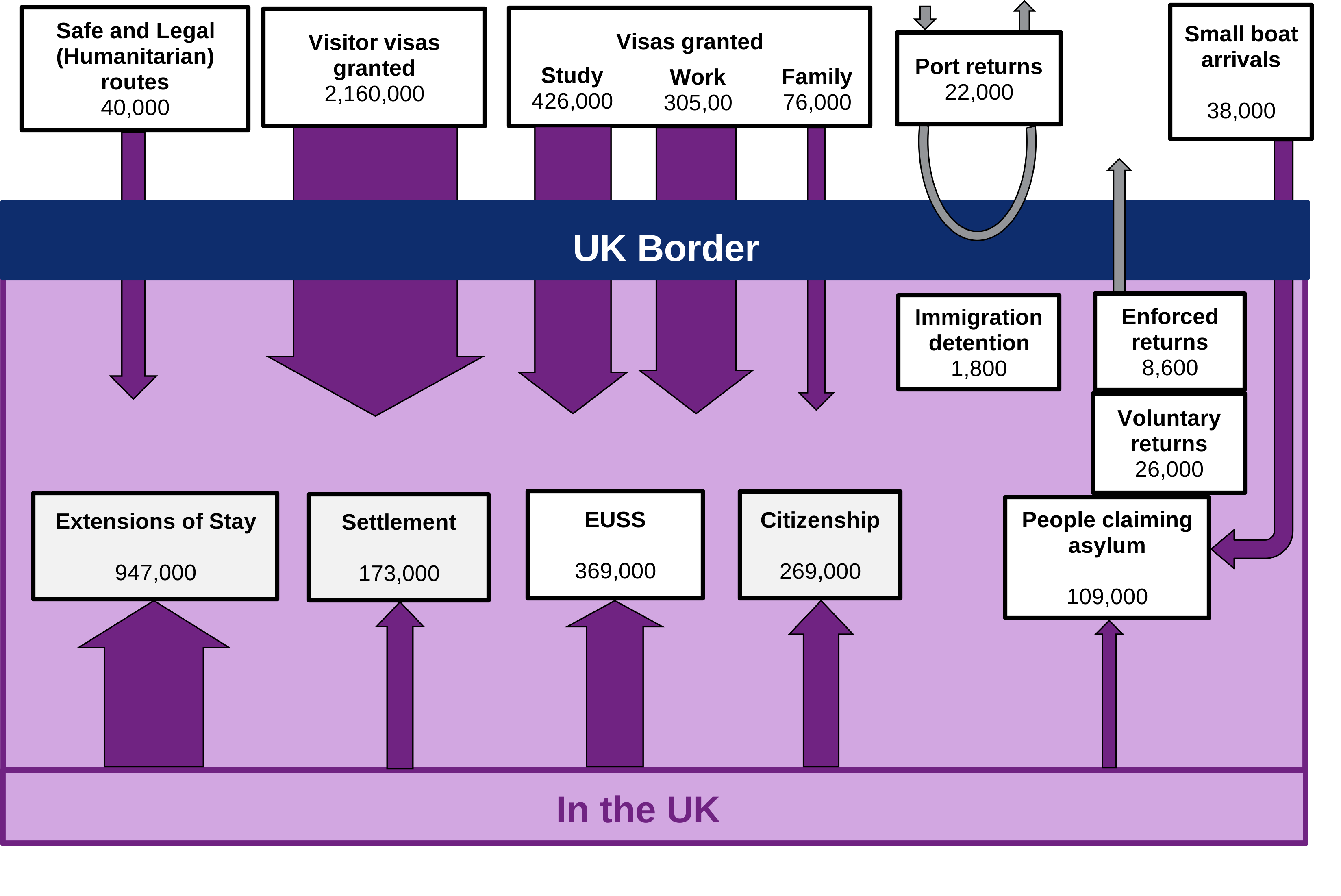
Summary of the UK immigration system in the year ending March 2025, showing primary entry routes and downstream outcomes — from work, study, and humanitarian routes to asylum claims, settlements, and citizenship. Source: UK Home Office – Immigration System Statistics, March 2025
But the numbers lie. Because while GDP has risen, GDP per capita has barely moved since the financial crisis.
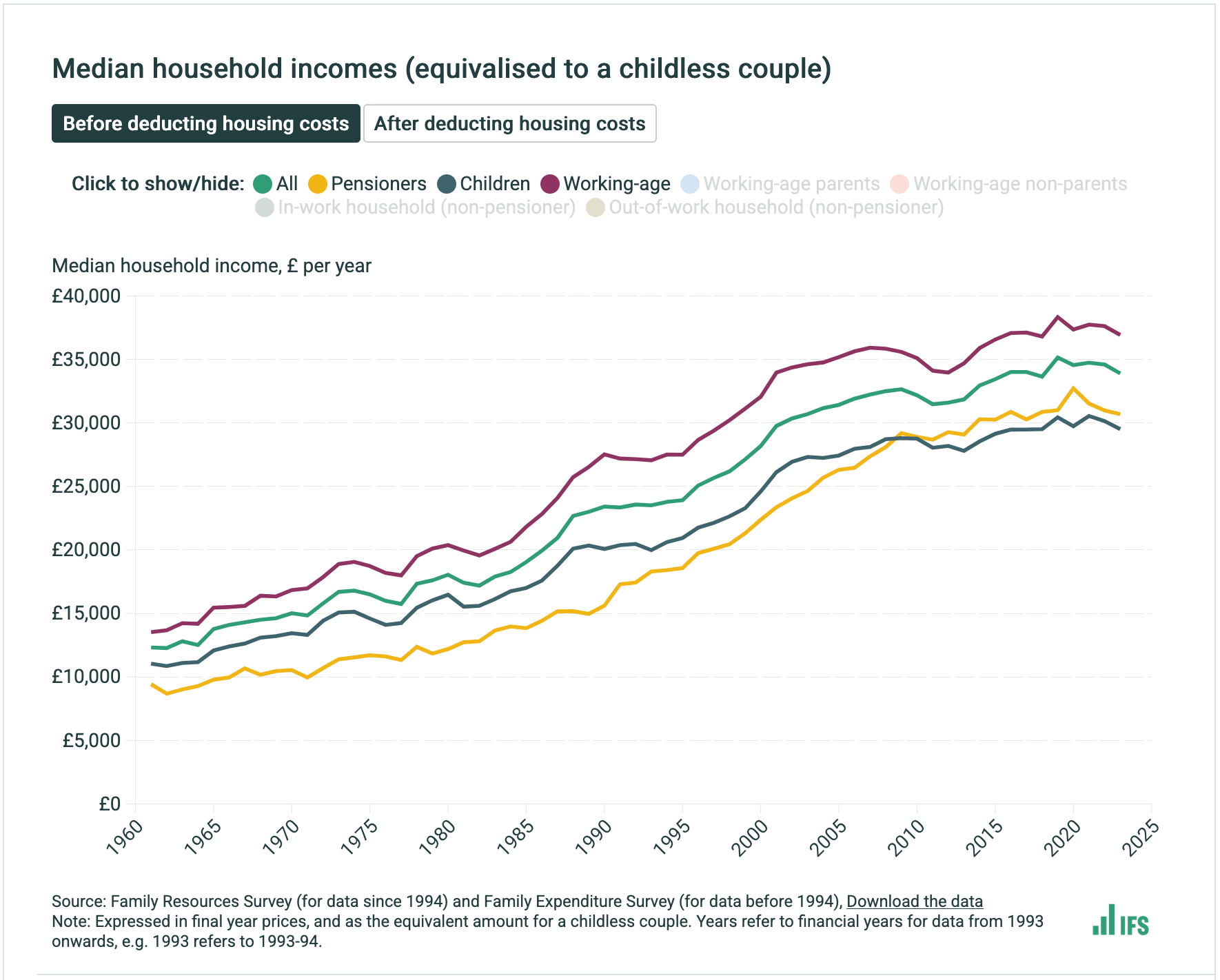
We are more crowded — not more prosperous.
Wages remain stagnant. Infrastructure buckles. And public services sink under rising demand.
Still, the model persists. Because it benefits the top — and buys time for the rest.
The very richest live above it. The very poorest are subsidised within it.
But the middle pays for it all — fully taxed, poorly served, politically abandoned.
Many of those arriving mean well.
But the system doesn’t measure contribution — it only counts arrivals.
If a low-wage worker pays £5,000 in tax but their household uses £25,000 in services, the system collapses.
And that’s what’s happening now.
IV. When the System Breaks Down
These consequences are no longer theoretical. They are visible in housing queues, ambulance waits, and classroom sizes.
If nothing changes, Britain will not just become more diverse. It will become less cohesive, less equal, and less governable.
The state will become more controlling. The culture more defensive.
And the public more suspicious — not just of government, but of each other.
The rich will retreat behind private walls. The poor will retreat into welfare.
And the middle — the people who keep the country running — will disappear, one by one, into private exhaustion.
Children will grow up not knowing what “Britishness” once meant.
Not because they rejected it — but because no one defended it when it mattered.
Subscribe to The Third Island for serious, fact-based commentary on Britain’s future.
V. A Country That Forgets Who It’s For
Hope begins with honesty.
Not every migrant is a threat. But not every migrant is a solution either.
A serious country does not open its borders wider than its schools, hospitals, and housing can bear.
And it does not lie to its people about what it’s losing.
Hope looks like truth-telling in Parliament. It looks like a media class that listens instead of correcting.
It looks like parents defending their schools, and commuters demanding the system works for them.
Above all, it looks like a public that says — without shame:
This is our country. We want it to work. For us. For those who built it. For those still growing up in it.
We have forgotten that protecting your home is not xenophobia.
It is responsibility.
VI. The Choice That Still Remains
The choice isn’t whether to rewind the clock.
It’s whether to break the silence — or live with the consequences.
There is still time. But not much.
The longer we stay silent, the harder truth becomes to tell.
Enjoying The Third Island? Subscribe to get new posts direct to your inbox.